
You use an RFID laundry tag to track clothes and linens in real time. Each RFID Launrdy tag contains a chip that stores a unique code. When you scan items, you see instant inventory updates. The demand for RFID laundry tag solutions drives global market growth to nearly $1.2 billion by 2033.
An RFID laundry tag is a small device that you attach to clothes, linens, or uniforms. This tag helps you track each item through every step of the laundry process. The tag contains a tiny chip and an antenna. The chip stores important information, such as a unique code for each textile. The antenna lets the tag communicate wirelessly with special readers. You can sew, heat-seal, or stick the tag onto fabric, so it stays in place during washing and drying.
Here is a table that shows the main parts of an RFID laundry tag and what each part does:
| Component | Function |
|---|---|
| Internal chip | Stores data and communicates with RFID readers. |
| Antenna | Enables wireless communication with UHF readers. |
| High temperature resistance | Ensures functionality in extreme washing conditions. |
| Waterproof and chemical-resistant | Protects the tag from damage during washing processes. |
| Sewable, heat-sealable, or adhesive-mounted | Allows for versatile attachment methods to textiles. |
| Lifespan of over 200 wash cycles | Ensures durability and longevity in laundry operations. |
| Compliance with ISO 18000-6C protocol | Ensures compatibility with standard RFID systems. |
You use an RFID laundry tag to give each textile a unique identity. When you attach the tag, the chip inside gets programmed with a special code. This code can include letters and numbers. It tells you what the item is, how to wash it, and its handling history. The tag uses radio waves to send this information to an RFID reader.
Here is how the process works in a typical laundry:
This real-time tracking helps you manage inventory better. You always know the location and status of each item. For example, if you run a hotel, you can quickly check if you have enough clean towels or bedsheets. You do not need to count items by hand, which saves time and reduces mistakes.
RFID laundry tags are very durable. They can handle high temperatures, strong chemicals, and many wash cycles. Some tags last for over 200 washes, and many can work for several years. You can trust these tags to keep working, even in tough industrial laundry environments.
You can use RFID laundry tags in many places. Hotels rely on them to track bed sheets and towels, making restocking easier and faster. Hospitals use these tags to monitor bed linens and nurse uniforms, helping maintain hygiene and safety. Commercial laundries depend on RFID technology to manage washing processes and item statuses. Uniform management systems in large organizations also benefit from RFID laundry tags. You can track garment ownership, monitor wash cycles, and ensure accountability. This technology supports centralized storage and strict control over uniforms.
RFID laundry tags help you improve efficiency and reduce errors. You can scan hundreds of items at once, which saves time and lowers labor costs. Automation minimizes human mistakes and speeds up sorting and distribution. You gain real-time inventory visibility, so you always know where your textiles are. This system prevents loss and theft, reducing shrinkage and replacement costs. In healthcare, RFID laundry tags help prevent infection by tracking cleaning history and logging compliance with hygiene protocols.
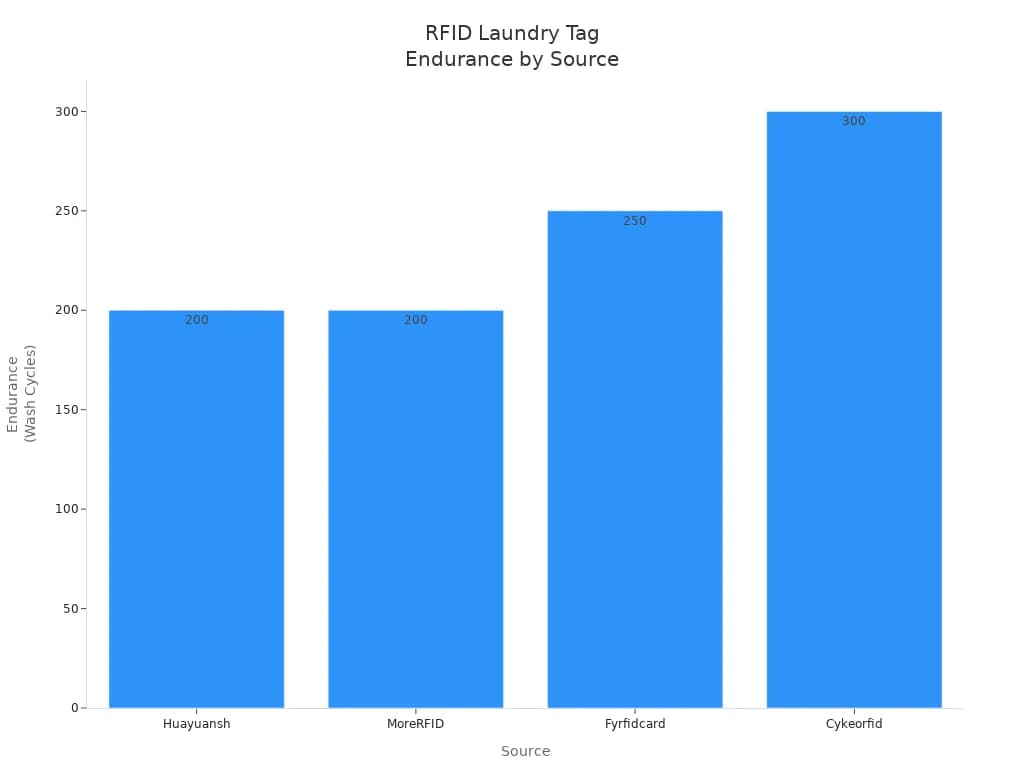
RFID laundry tags offer strong reliability. Many tags last over 200 wash cycles without losing performance. Some tags survive up to 300 cycles, even under harsh conditions. You can see the endurance of different tags in the chart below:
You can sew, heat-seal, or stick the tag onto the textile. The method depends on the tag type and the fabric.
Yes. RFID laundry tags resist water, heat, and chemicals. You can wash and dry them many times without damage.
No. The tag only stores a unique code for each item. Your personal data stays safe in the laundry management system.
No. 225 , 2F , Hombo innovation Technology Industrial park ,Qingning Rd .Longhua district ,
Email : info@zjiotech.com


 English