
You can protect your personal information from data theft with an RFID Blocking Card. This card keeps your bank cards and IDs safe by interfering with signals from unauthorized scanners. You face risks like financial loss, identity theft, and data loss in the digital age. Even though RFID skimming is rare compared to other scams, you still need simple solutions that fit easily into your daily routine. Feel confident knowing your cards stay secure wherever you go.
An RFID blocking card protects your personal information from unauthorized scanning, reducing the risk of data theft.
Using the card is simple; just place it next to your RFID-enabled cards in your wallet for effective protection.
Investing in an RFID Blocking Card is cost-effective, providing ongoing security without the need for frequent updates.
Stay vigilant by regularly checking your bank statements and using strong passwords alongside the blocking card for enhanced security.
The RFID Blocking Card fits easily into your daily routine, offering peace of mind in crowded places like airports and stores.
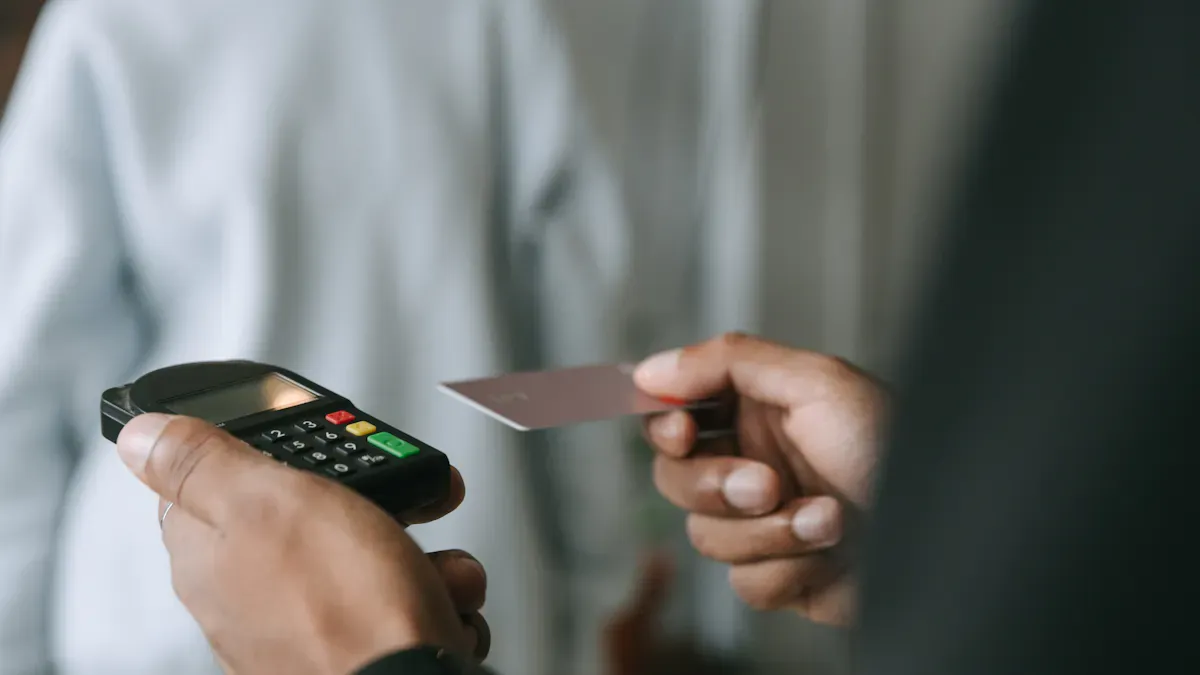
You use RFID technology every day, often without realizing it. RFID stands for Radio Frequency Identification. This system uses small chips and antennas to send information wirelessly. You find RFID chips in credit cards, passports, and identification badges. When you wave your card over a scanner, the chip sends a signal. This lets you pay quickly or prove your identity. RFID makes contactless transactions fast and easy. You do not need to swipe or insert your card. You simply hold it near a reader, and the transaction completes.
Many consumer products use RFID to keep your life convenient:
Wallets
Passport holders
Travel bags
Accessories for credit cards and IDs
You see RFID in places like airports, stores, and offices. High Frequency (HF) RFID systems work at short distances. This means your information stays safe unless your card is close to a scanner.
Here is a table showing common RFID products and their purpose:
|
Product Type |
Description |
|---|---|
|
RFID Blocking Wallets |
Designed to prevent unauthorized scanning of RFID-enabled cards. |
|
Individual Card Sleeves |
Protects single cards from electronic scanning. |
|
Passport Holders |
Shields passports from RFID scanning, ensuring personal information is secure. |
|
Single-Card Blocking Devices |
Compact solutions for protecting individual cards from unauthorized access. |
You face risks when you carry RFID-enabled cards. Criminals use special devices to steal your information. They do not need to touch your card. They only need to get close. Here are some common methods:
RFID skimming: Criminals use scanners to capture data from your cards, just like a store reader.
Mobile NFC readers: Some smartphones can scan your card if they are nearby.
Card-not-present fraud: Stolen data lets criminals make online purchases without your card.
You protect yourself by using tools like an RFID Blocking Card. This card stops scanners from reading your information. You gain peace of mind and keep your data safe in public places.
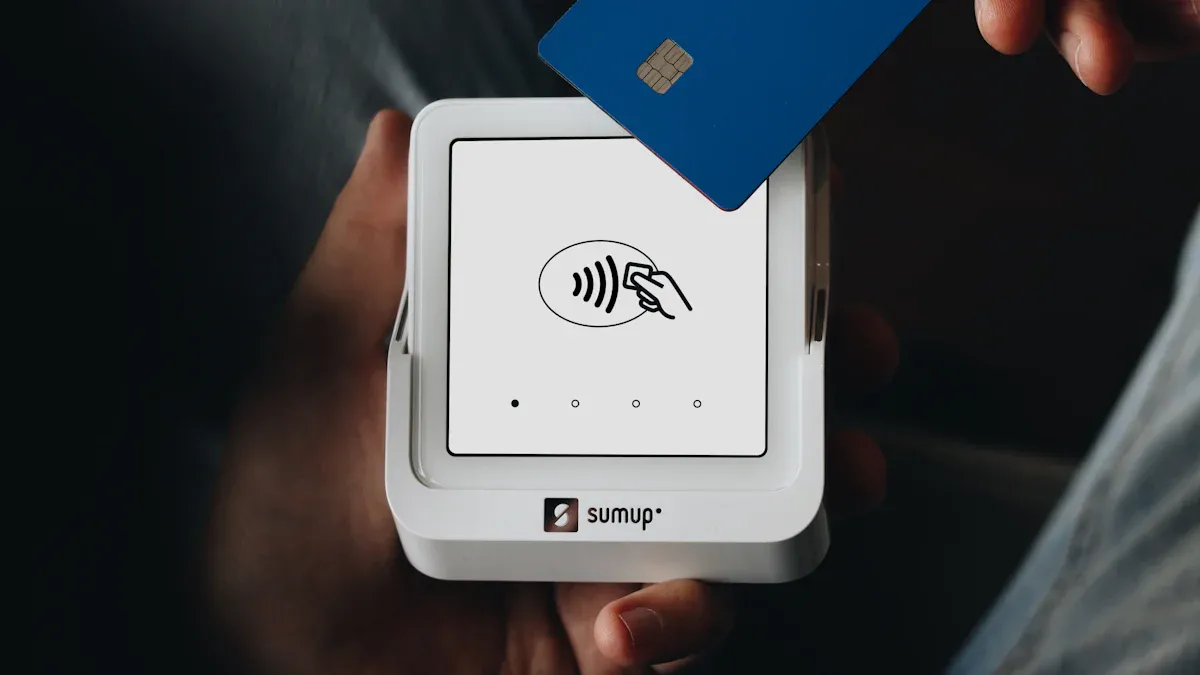
You protect your cards from data theft by using a special card that blocks electromagnetic waves. The Hot Popular 13.56MHz RFID Blocking Card uses a shielding chip to create a barrier around your RFID-enabled cards. This barrier acts like a mini-Faraday cage. It stops radio waves from reaching the chip inside your card. When you place the blocking card next to your bank card or ID, scanners cannot read your information.
Here is how the shielding chip works:
Conductive materials form a protective layer around your cards.
The metallic shield redirects radio waves, so they cannot reach your card’s chip.
Without enough radio energy, your card stays inactive and does not send any data.
Scientists have tested these cards. They found that RFID blocking cards use materials that disrupt electromagnetic fields. Thicker and denser materials give better protection. You can test the effectiveness by trying to scan your card while it is inside the blocking product. If the scanner cannot read your card, the blocking card works.
Manufacturers use different materials to make these cards. You can see the properties of each material in the table below:
|
Material |
Properties |
|---|---|
|
PVC |
Good flexibility, lower cost, but poor degradability |
|
PET |
Light-proof, eco-friendly, tear-resistant, high-temperature resistance |
|
ABS |
Durable and reliable option |
You get strong protection when you choose a card made from PET or PVC. PET is eco-friendly and tear-resistant. PVC feels soft and costs less.
You use the RFID Blocking Card every day to keep your information safe. The card fits easily in your wallet or purse. It comes in standard sizes, like 85.5mm x 54mm, which matches most credit cards. You can also choose custom sizes and thicknesses to fit your needs. Here is a table showing the options:
|
Feature |
Options |
|---|---|
|
Size |
85.5mm * 54mm (ISO CR-80 Standard), 8859mm, 8958mm, or customized |
|
Thickness |
0.76mm, 0.86mm, 0.3mm~1.8mm, 0.2mm-2mm as required |
You can personalize your card with full-color printing, serial numbers, barcodes, or QR codes. Businesses use these cards to promote their brand and protect their customers.
Shenzhen ZhiJie IOT Application Co.,Ltd makes the Hot Popular 13.56MHz RFID Blocking Card. The company follows strict quality control standards. You get a reliable product that keeps your data safe. You can trust the card to work every time you use it.
You keep your personal information secure with a simple step. The RFID Blocking Card gives you peace of mind and protects your cards from unauthorized scanning.
You hear about data theft in the news almost every day. Many people worry about RFID skimming, but it happens less often than other types of data theft. Phone scams and phishing attacks are still more common. Even so, the number of RFID skimming cases has grown. This growth links to the use of NFC-enabled debit and credit cards. Reports show a 30% increase in credit card theft since these cards became popular.
You see more products that block RFID because companies use marketing to make you aware of the risks. Even though RFID skimming is not the biggest threat, you should not ignore it. Criminals use hidden scanners to steal information from your cards without touching them. This can happen in crowded places like airports, shopping malls, or public transport.
The cards most at risk include:
Credit cards
Debit cards
Passports
Key fobs
Access cards used in hotels, homes, and workplaces
These cards have RFID chips that store your personal information. Thieves can scan them if you do not protect them. You need to stay alert and use simple tools to keep your data safe.
You want to protect your money and identity. An RFID Blocking Card helps you do this every day. You get peace of mind because you know your cards are safe from electronic pickpocketing. You do not need to worry about someone scanning your wallet without your knowledge.
Here are the practical benefits for you and your business:
|
Benefit |
Description |
|---|---|
|
Peace of mind |
Provides assurance that personal and financial information is safe from electronic pickpocketing. |
|
Cost-effective security |
A one-time investment that offers ongoing protection without the need for regular updates. |
|
Convenience |
Slim and discreet design that fits easily into wallets, unlike bulkier alternatives. |
|
Versatility |
Compatible with various RFID-enabled cards, making it a comprehensive solution for data protection. |
|
Active protection |
Some cards actively jam signals, enhancing security against data skimming attempts. |
You use the RFID Blocking Card to protect all your important cards. You do not need to change your routine. You just place the card in your wallet or purse. Businesses also use these cards to protect employees and customers. You save money because you do not need to buy new cards or pay for expensive security systems.
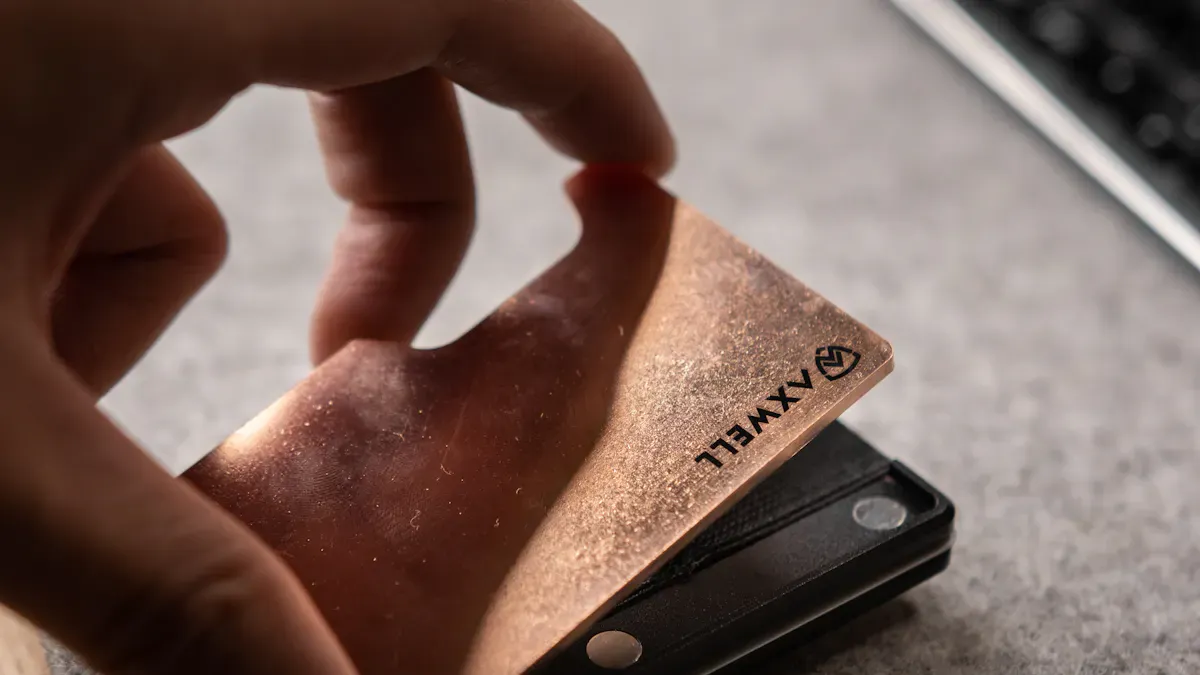
You want to pick the right RFID Blocking Card for your needs. Start by thinking about your risk exposure. If you have many RFID-enabled cards at home, you face a higher risk. Look at the cost of the card and compare it to the possible loss from data theft. Some cards offer a trial period, so you can test if it works for you. Think about how long you plan to use the card. A good card gives you protection for years without extra costs.
Here is a table to help you choose:
|
Criteria |
Description |
|---|---|
|
Risk Exposure |
Think about how many RFID cards you and your family use. |
|
Return on Investment |
Compare the card’s price to the money you could lose from theft. |
|
Guarantee Options |
Check if you can try the card risk-free. |
|
Long-Term Investment Perspective |
See if the card saves you money over time compared to other methods. |
You should also check the size and thickness. Most cards match a standard credit card, so they fit in your wallet without making it bulky. If you stack too many blocking cards, your wallet may feel uncomfortable.
You can use one RFID Blocking Card to protect several cards at once. Place it next to your most-used debit or credit card. The card creates a shield that blocks signals from scanners. You do not need to buy a special wallet or sleeve. You keep your favorite wallet style and still stay safe.
Follow these steps for best results:
Put the blocking card next to your most-used contactless card.
Check your bank statements often for strange activity.
Use strong passwords and two-factor authentication for your accounts.
Remember, the blocking card is one part of your security plan.
Many users say these cards work well. One developer tested his card and found it blocked 100% of scans. Another user liked the card’s look and felt more confident at work. You can trust the RFID Blocking Card to protect your cards every day.
Tip: Do not rely only on the blocking card. Stay alert and practice good security habits.
You can boost your security every day with an RFID Blocking Card. This simple tool blocks thieves from scanning your cards and keeps your information safe. You enjoy peace of mind, knowing your data stays private in busy places. Many people now choose this card because it fits easily into daily life and works without extra effort.
Protects against contactless crime
Gives you confidence in crowded spaces
Adapts to your routine with no hassle
Remember, small steps like this make a big difference in your safety.
You place the card next to your RFID-enabled cards. The blocking card creates a shield. Scanners cannot read your card’s data. This keeps your information safe from electronic pickpocketing.
Yes! You only need one RFID Blocking Card in your wallet. It protects several cards at once. You do not need a blocking card for each card.
No. The RFID Blocking Card only blocks radio waves for RFID chips. It does not interfere with your phone, keys, or other electronic devices.
No. 225 , 2F , Hombo innovation Technology Industrial park ,Qingning Rd .Longhua district ,
Email : info@zjiotech.com


 English